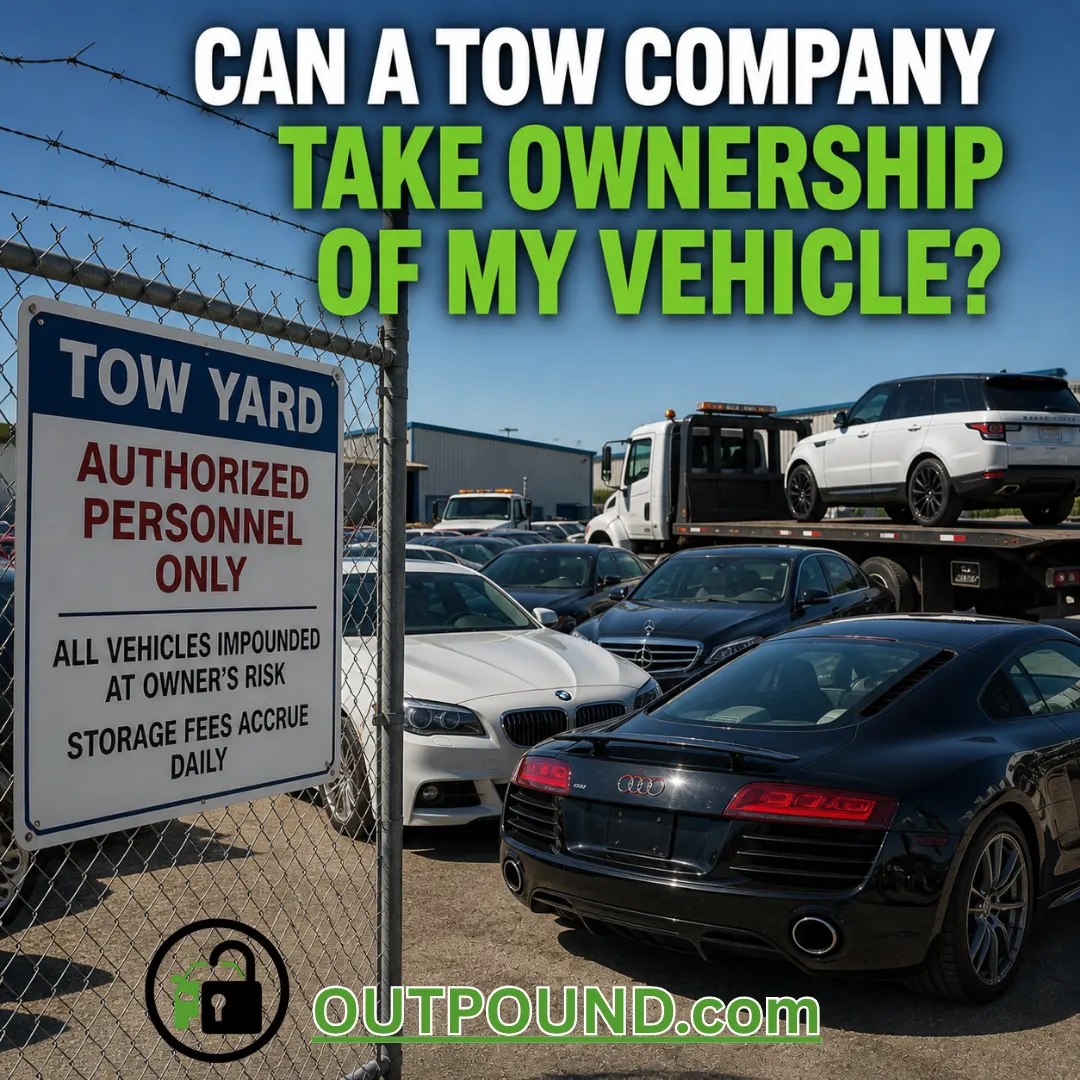
You walk into a tow yard expecting to pay a bill and retrieve your vehicle. But what happens if you don't retrieve it? Can the tow company eventually look at your car, decide you've waited too long and simply make it theirs?
The short answer is: under certain circumstances, a towing or storage company can eventually acquire or transfer ownership rights—but it generally cannot simply declare itself the new owner because your vehicle has been sitting there. There is a legal process in between, and that process matters.
Your Tow Bill Can Become a Lien Against the Vehicle
When a vehicle is legally towed and stored, state law may give the towing or storage company a lien against the vehicle for unpaid towing and storage charges.
Think of the lien as a legal claim connected to the money owed. It isn't necessarily the same thing as ownership.
This distinction is important. Having possession of your vehicle doesn't automatically mean the tow company owns it. But if the bill remains unpaid and the vehicle remains unclaimed, state law may eventually allow that lien to be enforced through a sale, title process or other procedure.
And the rules vary dramatically from state to state. For example, Nevada law allows certain tow operators to obtain title or satisfy a lien by retaining some qualifying low-value abandoned vehicles after required procedures are followed. Higher-value vehicles can move through a lien-satisfaction process if they remain unclaimed.
Florida uses a different system, with statutory notices and waiting periods before an eligible unclaimed vehicle can be sold at public sale to satisfy towing or storage charges. That's why there is no nationwide answer like, “After 30 days the tow company owns your car.” There isn't one universal deadline.
What Happens Before Ownership Can Change?
Depending on the state and type of tow, several things may happen before the vehicle can legally be sold or transferred.
| Stage | What's Happening |
|---|---|
| Vehicle is towed | Tow company takes possession |
| Charges begin | Towing/storage fees may create a lien |
| Owner/lienholder identified | Required notices may be sent |
| Vehicle remains unclaimed | Statutory deadlines continue |
| Lien is enforced | Sale/title procedures may begin |
| Vehicle is sold/transferred | Ownership can ultimately change |
Notice what's missing from that chart: “Tow company waits a week and keeps your Mercedes.” There are procedures for a reason. California, for example, requires documentation associated with lien sales, including certified mailing receipts and, for certain higher-value vehicles, DMV authorization to conduct the lien sale.
What If There's Still a Loan on the Car?
Now things get more interesting. If you financed the vehicle, your lender may already have a lien recorded against it. Tow and storage liens interact with existing lienholder interests according to applicable state law.
This is another reason you should never assume, “I'll just leave the car there and they'll take it.” Walking away doesn't necessarily make every financial obligation disappear. Depending on the circumstances, you could lose the vehicle while still facing consequences connected to the loan.
The Bigger Danger Is Waiting Until You Have No Good Options
Here's where people can get themselves into trouble. On Day 2, retrieving the vehicle may still be financially manageable.
After considerably more time in storage, the calculation can look very different. Eventually you may be staring at a vehicle worth several thousand dollars trapped behind a fence because you couldn't afford— or didn't want to pay—a much smaller bill earlier.
Instead of waiting for a lien sale or ownership process to decide what happens to your vehicle, find out what alternatives you have while you still have them.
That's where OUTPOUND may be able to help.
Depending on the vehicle, title or lien status, tow facility and individual circumstances, OUTPOUND may be able to purchase an eligible vehicle directly from impound rather than having the owner simply abandon it and potentially lose its remaining value.
If you don't plan to retrieve your impounded vehicle, don't assume the smartest move is doing nothing.
Find out what it's worth. Find out exactly what the tow yard requires. Find out what deadline applies. Then contact OUTPOUND.com before somebody else gets to decide what happens to your car.