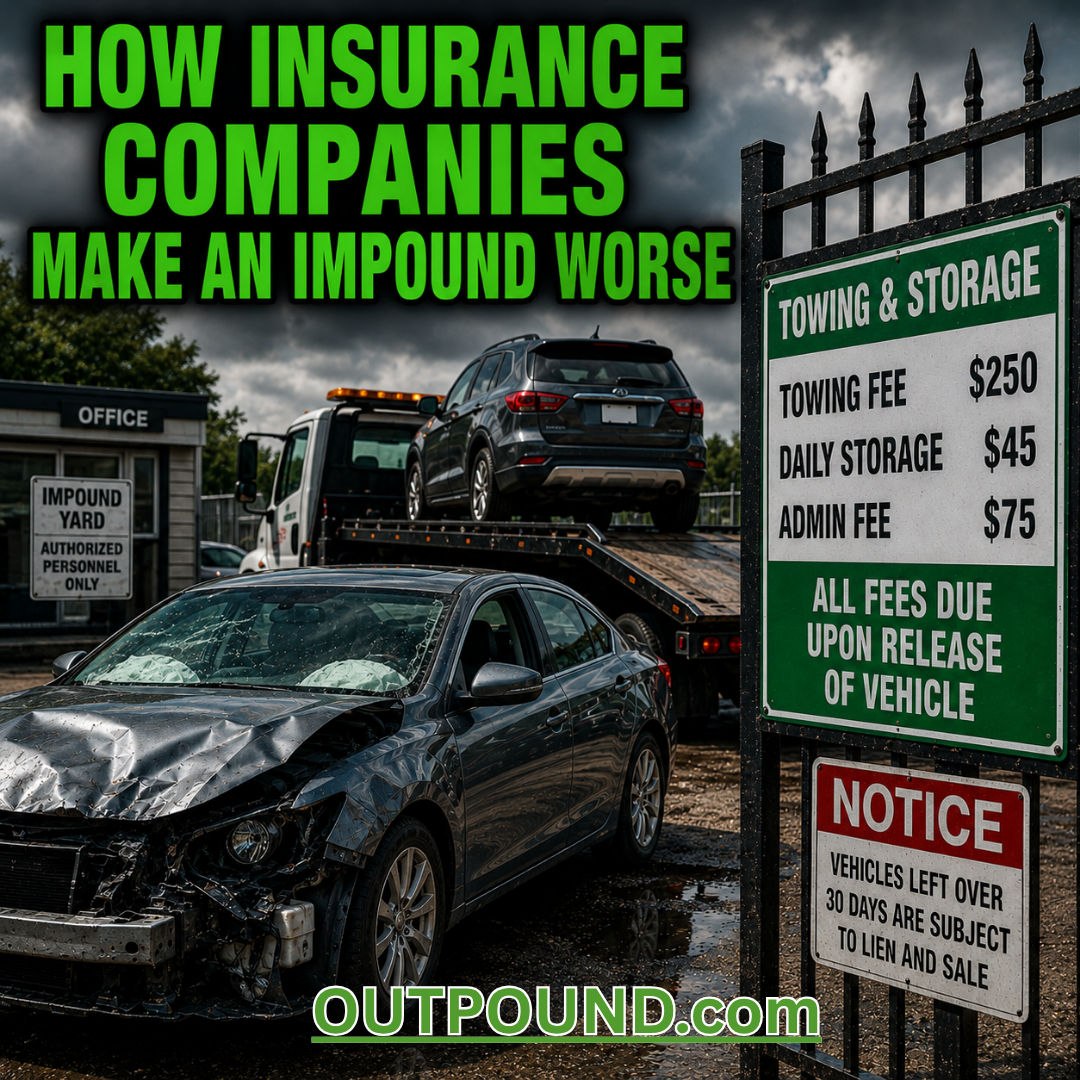
When a wrecked vehicle is sitting behind the gates of a tow yard and the owner discovers it may cost hundreds or thousands of dollars to get it released, the tow company usually becomes the immediate villain. They have the vehicle, they are presenting the bill, and storage charges may continue increasing every day. The anger is understandable, but the company holding the vehicle isn't necessarily the company responsible for creating the financial mess.
Let's be fair: not every tow company deserves defending. Towing and storage disputes are real, and consumers should question excessive fees, improper charges or questionable practices. However, there is a major difference between an abusive towing operation and a legitimate company charging for towing, recovery and storage services. Too often, that distinction gets lost when an insurance claim drags on and the vehicle owner is left staring at a growing bill.
The Tow Yard Doesn't Control Your Insurance Claim
After an accident, somebody has to remove the damaged vehicle from the roadway. That requires a truck, driver, equipment, fuel and sometimes specialized recovery work. Once removed, the vehicle must be transported and stored somewhere secure until someone decides what happens next.
The tow company does not interpret your insurance policy, determine coverage, assign an adjuster, approve repairs or declare the vehicle a total loss. Those decisions are generally happening elsewhere while the damaged vehicle continues occupying space at the tow yard.
This is where consumers can get hammered. An insurance company may be reviewing documentation, investigating coverage, determining liability or deciding what it will pay. Some of that work may be completely legitimate and necessary, but the storage clock doesn't stop while everyone waits.
WHO CONTROLS WHAT AFTER AN ACCIDENT?
Tow Company |
Insurance Company |
|---|---|
Tows the vehicle |
Reviews the claim |
Stores the vehicle |
Determines coverage |
Charges for storage |
Approves or denies payment |
Handles release requirements |
Determines covered expenses |
Doesn't control claim delays |
Controls its claim process |
The longer a vehicle remains in storage while decisions are being made, the greater the possibility that towing and storage expenses become another financial problem for the owner.
When Insurance Doesn't Pay, the Car Doesn't Disappear
Vehicle owners often assume that having insurance means everything will eventually be handled. Unfortunately, a claim can be delayed, disputed, partially covered or denied altogether. If that happens after the vehicle has already spent considerable time in storage, the owner may suddenly be dealing with accident damage, towing charges, storage fees and possibly a loan payment on a vehicle that isn't even drivable.
This is also why automatically blaming the tow company can miss the bigger picture. If a legitimate tow yard provided the recovery, transportation and storage services it was supposed to provide, the fact that an insurance decision took two weeks instead of two days isn't necessarily the tow company's fault.
At the same time, consumers should never assume every towing bill is automatically fair. Review the charges, ask questions and challenge anything that appears improper. The point isn't that tow companies can do no wrong. The point is that the business handing you the bill isn't always the business responsible for how long that bill had time to grow.
Stop Assuming Insurance Is Handling Everything
After an accident, find out exactly where your vehicle is located and what it costs to keep it there. Ask about the daily storage rate, release requirements and who is currently expected to pay those expenses. Then ask the insurance company whether it intends to move the vehicle, when that will happen and what happens to accumulated charges if coverage becomes disputed or denied.
Do not allow days to quietly become weeks because someone told you the claim is "being handled." Insurance companies manage claims according to policy terms, procedures and their own business interests. Tow companies operate businesses that charge for services and storage. Neither should automatically be assumed to be protecting your wallet.
Get Control Before the Bill Does
If your insurance claim is delayed, disputed or denied, start exploring your options immediately. Depending on the situation, that could mean moving the vehicle, disputing improper charges, selling the damaged vehicle or getting assistance with its release before storage expenses consume whatever value remains.
OUTPOUND helps vehicle owners understand their options and work toward getting vehicles released before an already expensive situation becomes financially devastating.
All tow companies are not bad, and all insurance companies are not bad. But when your vehicle is sitting in paid storage, figuring out who is responsible for what, and acting quickly can save you from learning one very expensive lesson:
The accident damaged your vehicle. Waiting can damage your wallet.
Go to OUTPOUND.com FIRST!