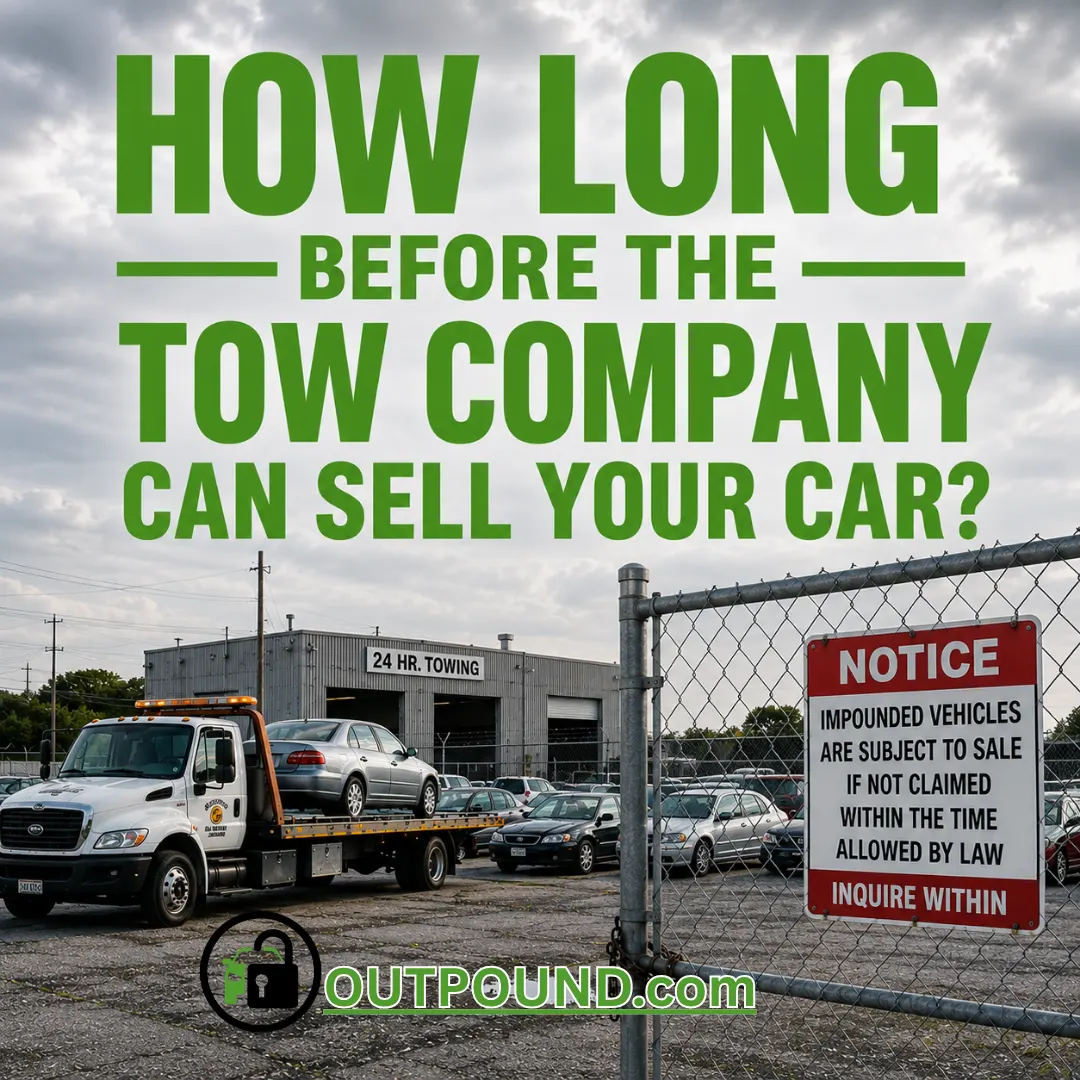
Over 26 million people have “Googled” this search, and is THE most common question people ask after discovering their vehicle has been towed is surprisingly simple: "How long do I have before they sell it?" Unfortunately, the answer is not nearly as simple.
Most vehicle owners assume their car can sit in an impound lot for months while they figure out their finances, gather paperwork, deal with insurance issues, or decide what to do next. In reality, tow companies are not operating free storage facilities. Every vehicle occupying space in an impound yard represents inventory, liability, administrative costs, and valuable space that could be used for the next tow.
Eventually, every impounded vehicle reaches a crossroads. Either the owner retrieves it, or the tow company begins moving through the legal process that may allow the vehicle to be sold, auctioned, or otherwise disposed of under state law.
The exact timeline depends heavily on where the vehicle is located. Different states have different notice requirements, waiting periods, lien procedures, and auction regulations. Some jurisdictions may allow the process to begin relatively quickly, while others require lengthy notification periods before any sale can occur.
What many owners fail to recognize, however, is that focusing on the sale date is often focusing on the wrong problem. The real damage usually occurs long before a vehicle ever reaches an auction block. While owners are wondering how much time they have left, storage fees continue accumulating every single day. Administrative charges may be added. Registration issues remain unresolved. Insurance problems continue. In some cases, mechanical issues that existed before the tow are still waiting on the other side of the fence.
The vehicle remains parked in the same location, but the financial burden attached to it grows steadily larger. That is why many impound situations become far more expensive than owners initially expect. A vehicle that seemed worth recovering during the first week can look very different after several weeks or months of storage fees. What started as a few hundred dollars may eventually become thousands.
Typical Impound Progression
Stage |
What Often Happens |
|---|---|
First Few Days |
Tow and storage fees begin accumulating |
First Several Weeks |
Notices may be mailed and balances increase |
One to Three Months |
Additional legal and administrative steps often begin |
Extended Delays |
Vehicle may become eligible for auction procedures |
Continued Inaction |
Owner's options become increasingly limited |
The harsh reality is that many people become emotionally attached to the idea of getting the vehicle back without honestly evaluating whether recovering it still makes financial sense. A vehicle worth $3,000 that requires $2,500 in storage fees, registration costs, repairs, and insurance expenses may not represent a good financial decision, regardless of how much the owner wants it back.
That is why the smartest move is usually not waiting to see what happens. The smartest move is understanding your options as early as possible while you still have them.
OUTPOUND helps vehicle owners evaluate impound situations before storage fees spiral out of control. Whether you're dealing with a recently towed vehicle, a growing impound balance, title complications, or a vehicle that has been sitting behind a fence longer than expected, understanding your options early can make a significant difference. In many situations, we are able to purchase the vehicle directly from impound, helping owners avoid mounting storage charges and regain control before the situation becomes substantially more expensive.
Because by the time most people start asking how long they have before the tow company can sell their car, the real issue is usually not the auction timeline—it's the amount of money they're losing while the vehicle sits behind the fence. Storage fees continue piling up, options become more limited, and the situation rarely improves with time.
That's why contacting OUTPOUND.com should be one of the first steps, not the last. The sooner you understand your options, the better your chances of avoiding escalating costs and finding a solution before the impound situation becomes significantly more expensive.