IT STARTS SMALL—BUT IT DOESN’T STAY THAT WAY
It rarely begins with panic. It begins with a missed payment that feels temporary, something you’ll catch up on soon enough. You still have your car, you’re still driving, and nothing seems urgent yet. But the moment that payment is missed, the situation quietly shifts behind the scenes. Your account is flagged, timelines begin, and from that point forward, you’re no longer operating on your schedule, you’re operating on the lender’s. What feels like a small delay to you is the beginning of a process that moves forward whether you’re ready or not.
THE SECOND MISS—WHEN PRESSURE BUILDS FAST
By the time a second payment is missed, the tone changes completely. This is no longer a simple oversight, it’s now a risk in the eyes of the lender. Calls increase, notices become more serious, and urgency starts to build, even if you’re not fully feeling it yet. Many people still believe they have time to fix things, but the reality is that decisions are already being made behind the scenes. The next step isn’t a possibility, it’s already in motion.
REPO HAPPENS FAST—AND WITHOUT WARNING
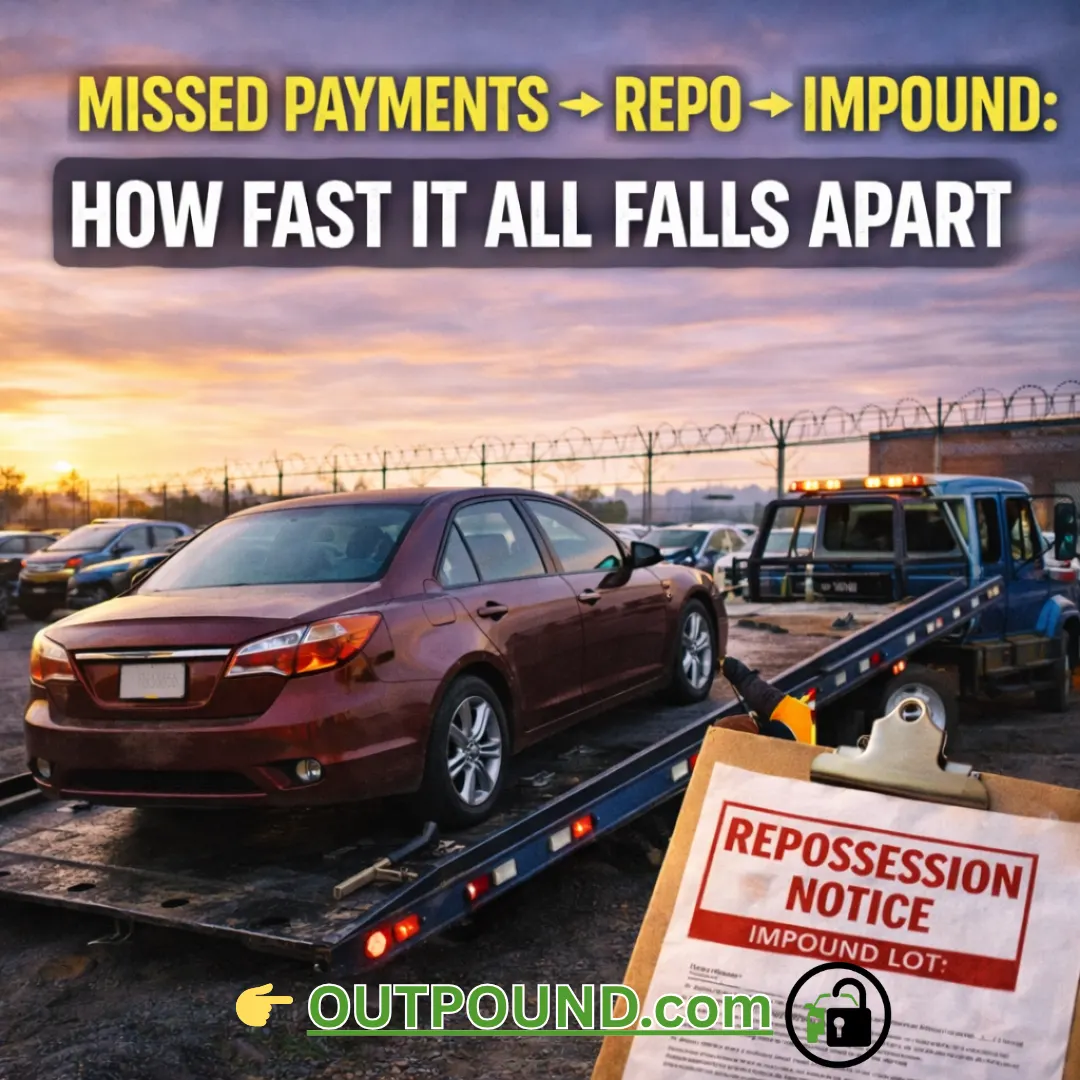
Repossession is where everything shifts instantly. There’s no dramatic heads-up, no final courtesy call giving you a chance to prepare. One day the car is there, and the next day it’s gone. In that moment, the situation stops being manageable and becomes disruptive. You’re no longer dealing with late payments —you’re dealing with access, recovery, and a completely different level of urgency. And once the car is gone, the financial pressure doesn’t pause—it accelerates.
IMPOUND IS WHERE THE COSTS START STACKING
After repossession, the vehicle typically lands in an impound or holding lot, and that’s where the real financial impact begins. Storage fees start accumulating daily, administrative charges are added, and repossession costs are layered on top. None of this slows down while you figure out your next move. What began as a missed payment has now turned into a growing bill tied to a vehicle you don’t even have access to. The longer it sits, the more expensive it becomes, and the harder it is to justify trying to recover it.
THE PANIC DECISION THAT COSTS PEOPLE THE MOST
At this stage, most people react emotionally. They want the car back, so they focus on paying whatever it takes to get it out. But stepping back for a moment, the math tells a different story. If you were already behind on payments, adding impound fees and recovery costs doesn’t solve the problem, it multiplies it. You’re not fixing your situation; you’re making it more expensive. Paying to get the car back often means stepping right back into the same cycle, just with less money and more pressure.
THE SMART MOVE—STEP OUT BEFORE IT GETS WORSE
This is where the mindset needs to shift from emotional to strategic. Instead of focusing on getting the car back at all costs, it’s about asking whether keeping it still makes financial sense. If the answer is no, or even uncertain, then continuing to pour money into it becomes the mistake. The smarter move is to step out cleanly before the situation gets worse, cutting off the financial drain instead of feeding it.
WHY OUTPOUND IS BUILT FOR THIS MOMENT
OUTPOUND.com exists for situations exactly like this! The complicated, high-pressure ones where time and money are working against you. They understand repossession, impound, and the urgency that comes with both. Instead of forcing you to navigate the process alone or sink more money into fees, they provide a way to resolve the situation quickly, helping you move forward without dragging the problem out or increasing the financial damage.
FINAL REALITY—THIS IS MOVING WHETHER YOU ACT OR NOT
At this point, the situation isn’t slowing down, it’s accelerating. What started as a missed payment has already turned into something much bigger, and every day you wait adds more cost and reduces your options. This stops being about the car itself and becomes about how much financial damage you’re willing to take before making a decisive move.