Bad News! The Fee Machine Is Already Running!
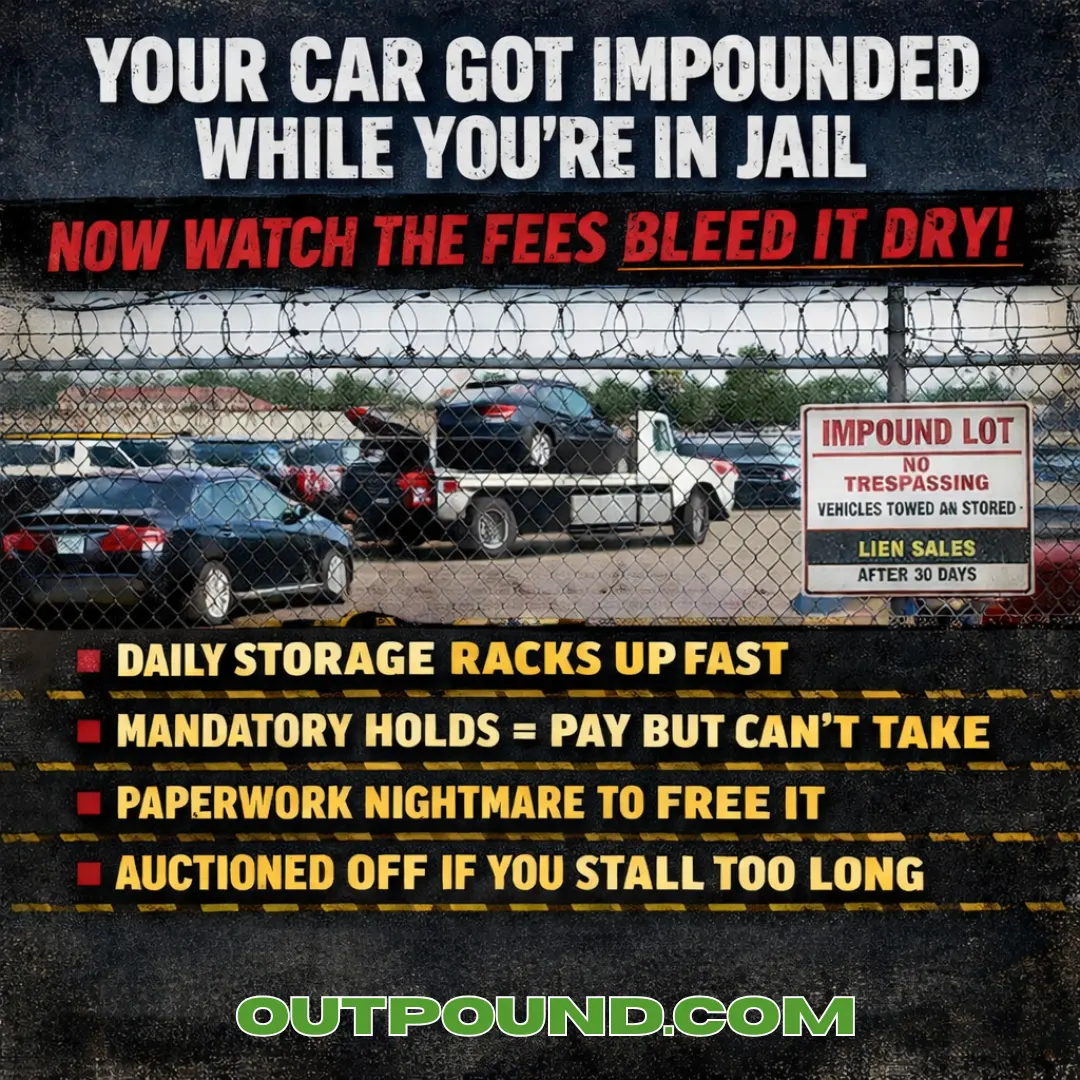
Here’s the brutal truth most people don’t hear until it’s too late: when a car is impounded after an arrest, the system doesn’t pause because the owner is sitting in jail. It doesn’t slow down. It doesn’t wait for fairness. The charges start immediately, and they stack daily whether anyone can act on the owner’s behalf or not.
Impound isn’t just storage. It’s a meter with teeth.
The moment the arrest happens and no licensed, approved driver is available, police order a tow. No negotiation. No grace period. Your vehicle is removed, logged, and dropped into a contracted yard that starts billing from minute one.
Initial hit usually includes a tow fee, intake fee, admin fee, and often an after-hours surcharge. That’s before anyone even figures out where the car went.
Storage Charges Don’t Care About Your Circumstances
It doesn’t matter if the owner:
- Can’t make calls
- Can’t access funds
- Can’t sign documents
- Is waiting for arraignment
- Is being transferred between facilities
Daily storage keeps rolling. Many yards charge rates high enough that within days, the bill becomes irrational compared to the vehicle’s value. A modest car can drown in fees in under two weeks.
No compassion discount exists.
The “Hold” Trap Makes It Worse
In many arrests, the vehicle is placed on a mandatory hold. That means even if someone shows up ready to pay, the yard legally cannot release it yet — but they can absolutely keep charging storage. Common hold triggers include DUI arrests, suspended licenses, investigative holds, and registration violations tied to statutory timelines.
So the owner can’t retrieve it. Family can’t retrieve it. But the bill grows anyway.
That’s not a glitch! That's how the model works.
Mid-Article Reality Check: How Fast Costs Explode
Typical Impound Cost Stack (Example)
- Tow charge: $225
- Intake/admin: $85
- After-hours release requirement: $95
- Daily storage ($55 × 10 days): $550
- Gate/release fee: $60
10-day total: $1,015
That’s for a completely average scenario — not worst case.
Third-Party Pickup Is a Paperwork Gauntlet
If the owner is in custody, someone else must run the obstacle course. Most yards demand:
- Notarized authorization letter
- Copy of owner ID
- Proof of ownership
- Current insurance
- Valid driver’s license
- Police release form
- Approved payment type
Now add real-world friction: jail notary access is limited, visiting hours are tight, police release desks keep banker’s hours, and weekends freeze progress. One missing stamp or mismatched name can trigger a denial, and another day of storage.
Payment Rules Often Feel Weaponized
Many impound operators restrict payment methods in ways that make rescue harder:
- Cash or debit only
- No credit cards
- Exact totals required
- No split tenders
- No partial payments
Close doesn’t count. If you’re short, you’re coming back tomorrow, and tomorrow costs another day of storage.
The Endgame: Auction and Aftershock
When fees climb past reason, the yard starts lien sale proceedings. Notices go out. Deadlines run. The vehicle is auctioned.
And if the auction doesn’t cover the balance? The former owner can still be billed for what’s left.
Car gone. Debt survives. Case still pending.
The Only Smart Move Is Fast Action
The longer an impounded vehicle sits, the worse the math gets. Owners and families who move quickly, gathering documents, demanding release conditions, and pushing back on improper barriers, have the best chance of stopping the bleed.
Situations like this happen every day, and most victims have no idea what they’re walking into until the fees are already out of control. That’s exactly why OUTPOUND is your next call! We exist to help people fight through the red tape, challenge abusive practices, and stop the financial spiral before the car and the cash are both gone. OUTPOUND your car today with OUTPOUND.com!