What Can I Do to Get It Back?
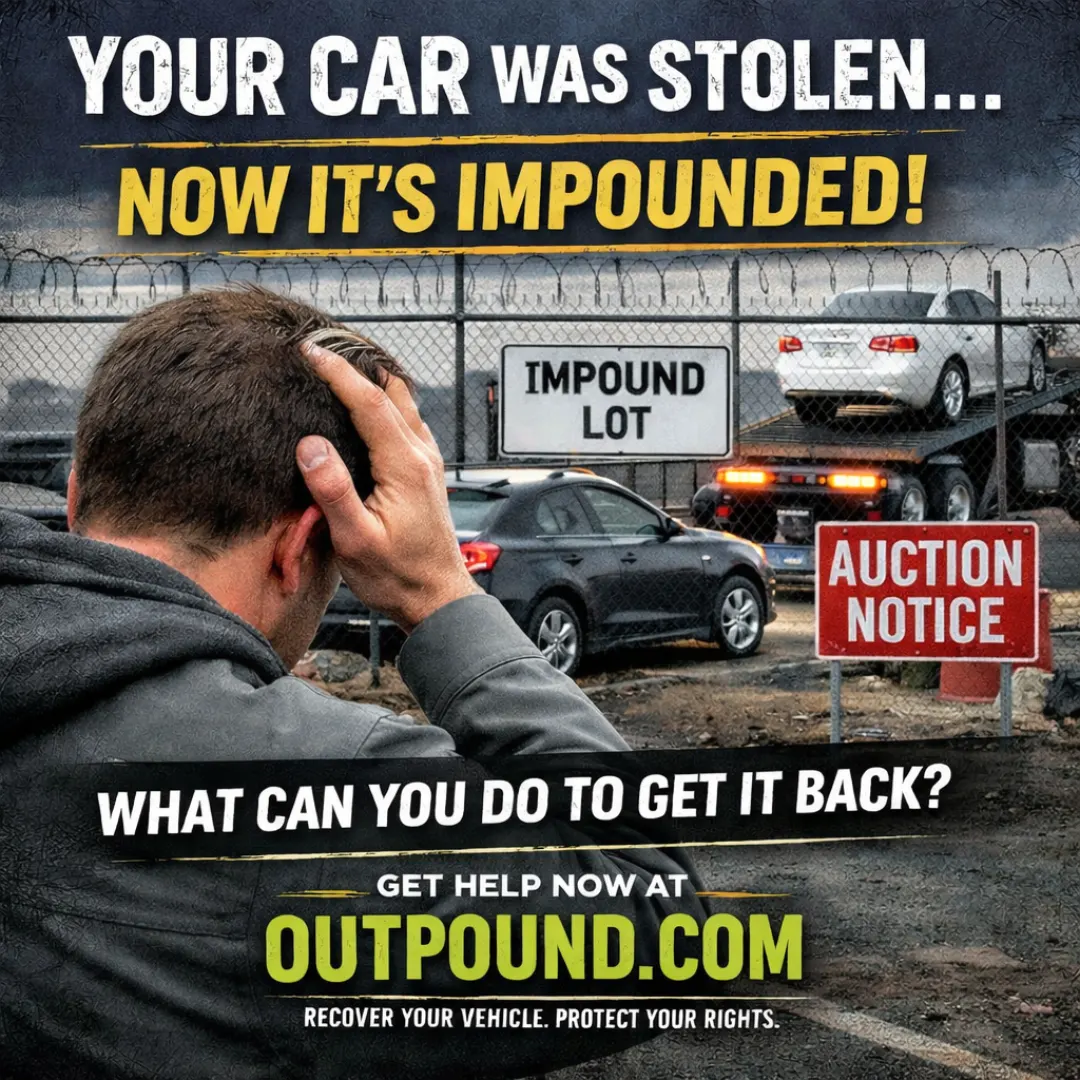
Finding out your car was stolen is sickening. Finding out it’s been recovered, but is now sitting in an impound lot racking up daily storage fees, can feel like a second punch to the gut.
At OUTPOUND, we talk to victims every single day who thought the nightmare was over once police found their vehicle. Instead, they’re hit with towing charges, storage fees, lien paperwork, and confusing deadlines. Here’s what you need to know, and how to protect yourself.
Step 1: Confirm Where the Vehicle Is Being Held
When law enforcement recovers a stolen vehicle, they typically authorize a tow to a contracted impound yard. That yard begins charging storage immediately.
Call the police department that handled the recovery and ask for:
- The name of the tow yard
- The address and phone number
- The date and time the vehicle was towed
- The case or report number
Time matters. Storage fees can range from $40 to over $100 per day depending on the region.
Step 2: Understand What You Owe — and What You Don’t
Here’s where things get frustrating.
Even though you’re a crime victim, most states allow tow yards to charge:
- Towing fees
- Administrative fees
- Daily storage charges
However, there are limits. Some states cap fees for stolen vehicle recoveries. Others require reduced storage rates if you respond quickly. Some insurance policies cover recovery-related towing and storage.
Before paying anything:
- Ask for a written, itemized invoice
- Confirm the daily storage rate
- Ask if stolen vehicle fee reductions apply
Do not rely on verbal quotes.
Step 3: Act Fast to Avoid a Lien Sale
Impound lots operate on strict legal timelines. If a vehicle sits too long without payment, the tow yard may begin lien sale proceedings. That means they can legally sell your vehicle to recover fees.
In many states, the lien process can begin in as little as 10–30 days.
You may receive:
- A lien notice letter
- A pending auction notice
- A deadline to redeem the vehicle
Miss that deadline, and ownership can transfer, even though the vehicle was stolen from you.
Step 4: Contact Your Insurance Immediately
If you carry comprehensive coverage, your insurance may:
- Cover towing and storage
- Pay for damages from the theft
- Handle negotiations with the tow yard
Ask your adjuster:
- How many days of storage are covered
- Whether they will pick up the vehicle directly
- Whether they will dispute excessive charges
Do not assume coverage! Confirm it in writing!
Step 5: Know Your Rights as a Crime Victim
Here’s what many people don’t realize:
Tow yards must follow strict legal notification procedures. If they fail to send proper notice, miscalculate timelines, or charge illegal fees, you may have grounds to challenge the impound.
Common violations include:
- Charging excessive storage beyond statutory limits
- Failing to notify the registered owner
- Refusing reasonable access to retrieve personal property
- Starting lien sale paperwork prematurely
These mistakes happen more often than people think.
The Hard Truth
Tow yards are businesses. Once your vehicle is on their lot, the meter is running. They are not required to “wait” indefinitely, even if you’re a theft victim.
That’s why immediate action is critical.
How OUTPOUND.com Helps
If your stolen car is now impounded and you feel overwhelmed, confused, or pressured — we step in.
We help victims:
- Review fee breakdowns
- Identify improper charges
- Evaluate lien sale timelines
- Understand state-specific impound laws
- Communicate strategically with tow operators
You didn’t ask for this situation. You shouldn’t lose your vehicle because of confusing procedures or aggressive impound practices.
If your stolen vehicle is sitting in a tow yard right now, don’t wait until the auction notice arrives. Visit OUTPOUND.com and get help immediately.
Because being a victim of theft shouldn’t turn into losing your car twice.