The Label That Quietly Strips You of Ownership
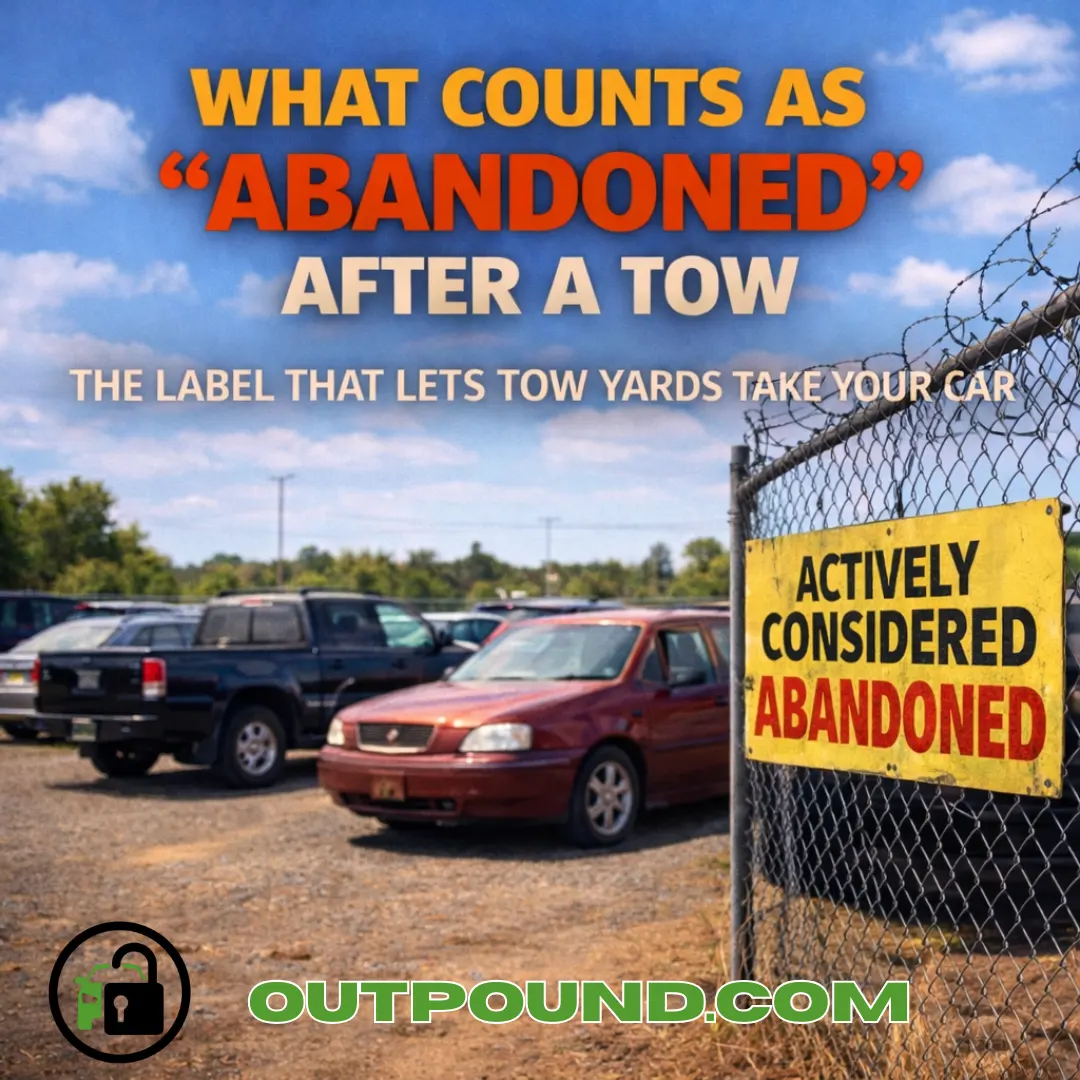
When a tow yard calls a vehicle “abandoned,” it’s not making a judgment about whether the owner cares. It’s flipping a legal switch that allows the system to move forward without you. And once that switch flips, your car stops being treated like personal property and starts being processed as an asset to be sold. That’s the part most people never see coming.
A car does not have to be unwanted, neglected, or forgotten to be legally considered abandoned. It only has to remain in a tow yard long enough for a deadline to pass. Intent doesn’t matter. Circumstances don’t matter. Time does.
Abandonment Is Driven by Timelines, Not Common Sense
Most people assume abandonment only applies when someone truly walks away from a vehicle. In reality, the abandonment clock often starts the moment the tow happens, not when the owner is notified and not when the car is finally located. While you’re calling insurance, waiting on paperwork, arranging money, or simply trying to understand what happened, the system is already moving forward.
The tow process does not pause because you are actively trying to do the right thing. It moves on fixed timelines that do not account for confusion, delays, or real life.
How a Towed Car Becomes “Abandoned” in the Real World
What the Owner Thinks Is Happening |
What the Tow Yard Is Doing |
What It Leads To |
|---|---|---|
“I’m still figuring this out” |
Storage clock is running |
Fees increase daily |
“Insurance will handle it” |
Paperwork advances |
Deadlines close |
“I never got a notice” |
Notice logged as sent |
Abandonment eligibility |
“I’ll deal with this soon” |
Lien process begins |
Ownership at risk |
“I still want my car” |
Sale prep starts |
Leverage disappears |
This is how abandonment happens quietly — without confrontation and without the owner ever feeling like they made a decision to give up the car.
Situations That Commonly Trigger Abandonment
Cars are most often labeled abandoned after private-property tows, police or DUI tows, accident tows, or situations involving registration or documentation issues. In many cases, the owner never refused to retrieve the vehicle. They simply didn’t move fast enough for the system.
Once the tow yard marks an owner as non-responsive, even temporarily, the process shifts into a different gear.
Why Notices Don’t Protect You
Many people believe a notice exists to warn them. In practice, notice exists to protect the process.
In many jurisdictions, sending one notice, often by mail, satisfies the requirement. If it goes to an outdated address, arrives late, or is never seen, the tow yard can still claim compliance. The clock does not stop just because the owner didn’t receive or understand the notice.
That’s how people lose cars without ever knowingly ignoring anything.
After Abandonment, Options Shrink Fast
Once a vehicle is officially classified as abandoned, the landscape changes. Fees often increase, lien paperwork can begin, and sale or auction timelines are triggered. At that point, stopping the process becomes much harder and sometimes impossible.
The earlier someone steps in, the more leverage exists.
How OUTPOUND Helps Before It’s Too Late
Our team was brought together to help people before their vehicle crosses the abandonment line. We help identify where the car actually is in the process, how much time is really left, and what actions still matter. By stepping in early, it’s often possible to interrupt paperwork, slow the process, and protect ownership before the label becomes permanent.
This isn’t about reacting after the damage is done. It’s about preventing it.
Final Reality Check
“Abandoned” doesn’t mean unwanted. It means the clock ran out.
If your car was towed and time is passing, don’t assume wanting it back is enough. The system doesn’t care about intent — only deadlines.
OUTPOUND.com helps people get their vehicles back before abandonment turns into permanent loss.