Timeline from Hook to Sale
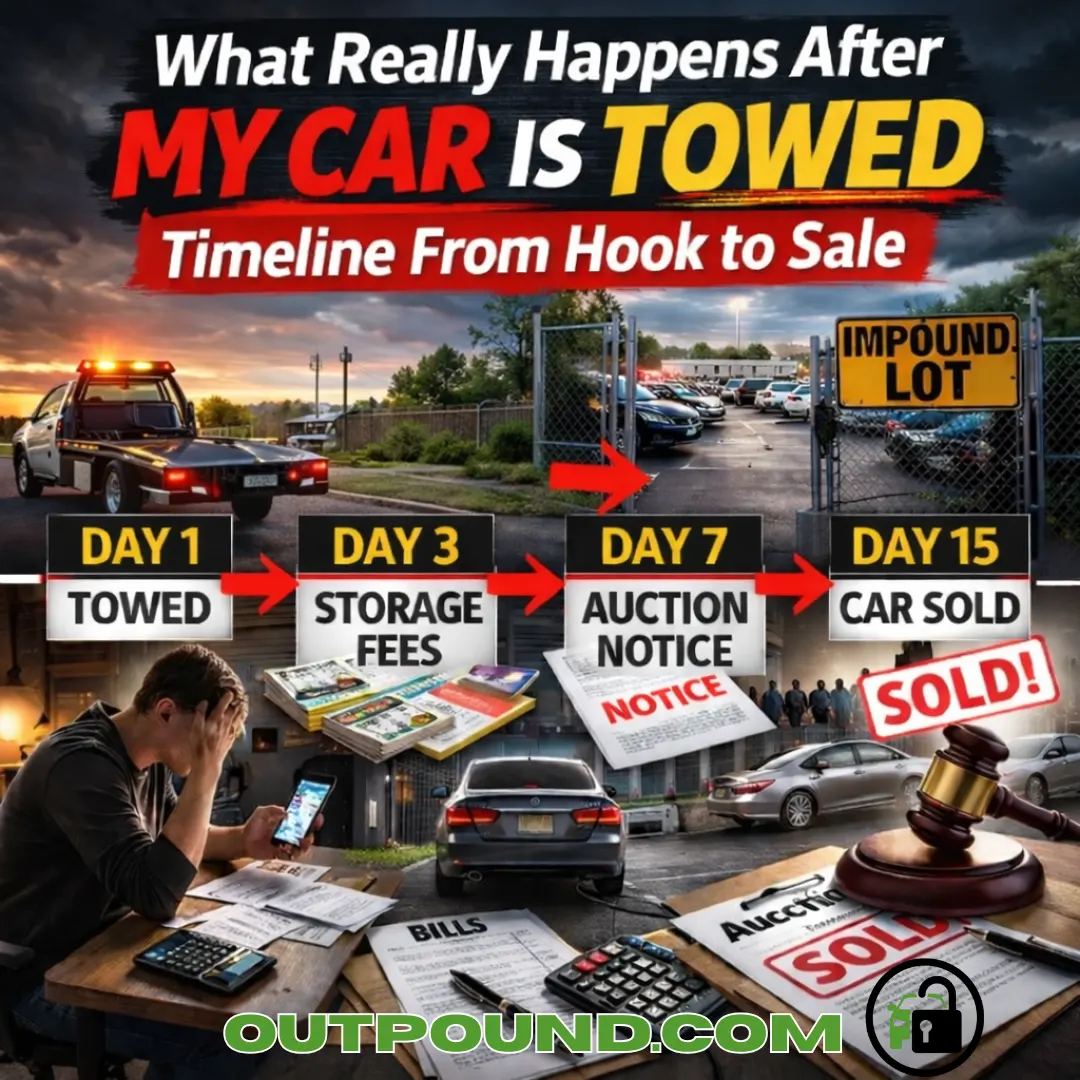
Most people think the tow is the worst part. It’s not.
The moment your car is hooked and lifted, a legal and financial timeline quietly begins. And that timeline moves faster than most vehicle owners realize. From the second the truck pulls away, the process is no longer emotional, it’s procedural.
Here’s what really happens.
Stage 1: The Hook (Hour 0)
Whether the tow was due to parking enforcement, expired registration, police action, accident, or repossession, the clock starts immediately. The vehicle is transported to a storage or impound facility, logged into an intake system, and assigned daily storage charges. Fees begin the same day; sometimes by the hour. You may not even know where the vehicle is yet, but the meter is already running.
Stage 2: Intake & Storage (Day 1–3)
Once in the yard, the vehicle is:
- Documented and photographed
- Logged for condition
- Assigned a case number
- Linked to the registered owner
Administrative charges are added. Storage fees accumulate daily. Tow operators follow state-required notice procedures, which often include mailing notification to the address on file with the DMV.
Important detail: The law typically requires that notice be sent, not confirmed received.
If your address is outdated, you may never physically see the warning.
Stage 3: The Legal Clock (Day 3–10 in Many States)
This is where most people lose control without realizing it.
State statutes allow impound yards to begin abandonment or lien sale procedures after a short holding period. In some states, that threshold is under ten days. In others, it’s only slightly longer.
During this time:
- Storage fees continue
- Redemption amounts increase
- Auction eligibility approaches
Owners often assume they have weeks. In reality, many have days.
If there is a lender involved, they are also notified. In some cases, the lender may step in. In others, they may allow the impound sale process to continue.
Stage 4: Sale Authorization (Typically Within 10–30 Days)
If fees are not paid and the vehicle is not redeemed, the yard can:
- File for lien sale approval
- Publish or list the vehicle for auction
- Transfer title upon sale
Once the vehicle is sold, ownership legally changes. At that point, recovery becomes extremely unlikely.
Many owners don’t learn their car was sold until they try to retrieve it.
Stage 5: After the Sale
This part surprises people.
If the vehicle sells:
- Proceeds go toward tow and storage fees
- Any surplus may be processed according to state law
- Any deficiency (shortfall) may still be pursued
In repossession-related situations, you may still owe a deficiency balance to the lender even after the car is gone.
The system is designed to recover costs quickly, not to maximize fairness for the owner.
Where OUTPOUND Changes the Timeline
Here’s the critical part: the only stage where you still have leverage is before the sale.
That’s where OUTPOUND.com steps in.
We help vehicle owners understand exactly where they are in the process, not guesses, not assumptions, but real-time status. When fees are climbing and auction is approaching, acting early can mean the difference between a controlled outcome and total loss.
In many cases, selling the vehicle strategically before auction prevents silent loss and stops daily storage bleed. Waiting almost always reduces options.
The Real Truth
The tow is not the end of the story. It’s the beginning of a countdown.
From hook to sale, the process moves quietly, legally, and quickly. If your vehicle has been towed, time is your most valuable asset, and once it’s gone, so is your leverage.
OUTPOUND.com exists to step in before the timeline closes.